Repository navigation
Class: Bard 🎭

Start the beat.
Put on a smile.
The show is on.
All eyes on you.And you have eyes on them.
You get your spotlight. That is all you need.
Time to show your own kind of magic.You have heard this one before. You remember how it ends.
Then the beat stops.
Take a bow.
The show goes on.
You will live this life for another day.
| Trait | Detail |
|---|---|
| Primary Ability | Charisma |
| Hit Point Die | D8 per Bard level |
| Saving Throw Proficiencies | Dexterity and Charisma |
| Skill Proficiencies | Choose any 3 skills |
| Tool Proficiencies | Choose 3 Musical Instruments |
| Weapon Proficiencies | Simple weapons |
| Armor Training | Light armor |
| Starting Equipment | Choose A or B: |
| (A) | Leather Armor, 2 Daggers, Musical Instrument of your choice, Entertainer's Pack, and 19 GP |
| (B) | 90 GP |

- Gain all the traits in the Core Bard Traits table.
- Gain the Bard's level 1 features, which are listed in the Bard Features table.
- Gain the following traits from the Core Bard Traits table: Hit Point Die, proficiency in one skill of your choice, proficiency with one Musical Instrument of your choice, and training with Light armor.
- Gain the Bard's level 1 features, which are listed in the Bard Features table. See the multiclassing rules in multiclassing to determine your available spell slots.
As a Bard, you gain the following class features when you reach the specified Bard levels. These features are listed in the Bard Features table.
| Level | Proficiency Bonus | Features | Bardic Die |
|---|---|---|---|
| 1 | +2 | Bardic Inspiration, Spellcasting | D6 |
| 2 | +2 | Expertise, Jack of all Trades | D6 |
| 3 | +2 | Bard Subclass | D6 |
| 4 | +2 | Ability Score Improvement | D6 |
| 5 | +3 | Font of Inspiration | D8 |
| 6 | +3 | Subclass feature | D8 |
| 7 | +3 | Countercharm | D8 |
| 8 | +3 | Ability Score Improvement | D8 |
| 9 | +4 | Expertise | D8 |
| 10 | +4 | Magical Secrets | D10 |
| 11 | +4 | — | D10 |
| 12 | +4 | Ability Score Improvement | D10 |
| 13 | +5 | — | D10 |
| 14 | +5 | Subclass feature | D10 |
| 15 | +5 | — | D12 |
| 16 | +5 | Ability Score Improvement | D12 |
| 17 | +6 | — | D12 |
| 18 | +6 | Superior Inspiration | D12 |
| 19 | +6 | Epic Boon | D12 |
| 20 | +6 | Words of Creation | D12 |
| Level | Cantrips | Prepared Spells | 1st | 2nd | 3rd | 4th | 5th | 6th | 7th | 8th | 9th |
|---|---|---|---|---|---|---|---|---|---|---|---|
| 1 | 2 | 4 | 2 | — | — | — | — | — | — | — | — |
| 2 | 2 | 5 | 3 | — | — | — | — | — | — | — | — |
| 3 | 2 | 6 | 4 | 2 | — | — | — | — | — | — | — |
| 4 | 3 | 7 | 4 | 3 | — | — | — | — | — | — | — |
| 5 | 3 | 9 | 4 | 3 | 2 | — | — | — | — | — | — |
| 6 | 3 | 10 | 4 | 3 | 3 | — | — | — | — | — | — |
| 7 | 3 | 11 | 4 | 3 | 3 | 1 | — | — | — | — | — |
| 8 | 3 | 12 | 4 | 3 | 3 | 2 | — | — | — | — | — |
| 9 | 3 | 14 | 4 | 3 | 3 | 3 | 1 | — | — | — | — |
| 10 | 4 | 15 | 4 | 3 | 3 | 3 | 2 | — | — | — | — |
| 11 | 4 | 16 | 4 | 3 | 3 | 3 | 2 | 1 | — | — | — |
| 12 | 4 | 16 | 4 | 3 | 3 | 3 | 2 | 1 | — | — | — |
| 13 | 4 | 17 | 4 | 3 | 3 | 3 | 2 | 1 | 1 | — | — |
| 14 | 4 | 17 | 4 | 3 | 3 | 3 | 2 | 1 | 1 | — | — |
| 15 | 4 | 18 | 4 | 3 | 3 | 3 | 2 | 1 | 1 | 1 | — |
| 16 | 4 | 18 | 4 | 3 | 3 | 3 | 2 | 1 | 1 | 1 | — |
| 17 | 4 | 19 | 4 | 3 | 3 | 3 | 2 | 1 | 1 | 1 | 1 |
| 18 | 4 | 20 | 4 | 3 | 3 | 3 | 3 | 1 | 1 | 1 | 1 |
| 19 | 4 | 21 | 4 | 3 | 3 | 3 | 3 | 2 | 1 | 1 | 1 |
| 20 | 4 | 22 | 4 | 3 | 3 | 3 | 3 | 2 | 2 | 1 | 1 |
-
Level 1 -
Bardic Die: {DX}
-
Inspiration Uses {CHA}
Believe in them. You will see.
Your Bardic Inspiration die is a {Bardic Die}.
Bonus Action: inspire a creature within 60 feet that can see or hear you. That creature gains one Bardic Inspiration die. A creature can have only one Bardic Inspiration die at a time.
Once within the next hour, when the creature fails a D20 Test, it can roll the die and add the number to the d20, potentially turning failure into success. The die is expended when rolled.
You can confer a total of {CHA} Bardic Inspiration dice. You regain all expended uses when you finish a Short or Long Rest.
| Level | Bardic Die |
|---|---|
| 1..4 | D6 |
| 5..9 | D8 |
| 10..14 | D10 |
| 15... | D12 |
Level 1
Anyone can say the words. Few can play the role.
You have learned to cast spells through your bardic arts. See chapter 7 for the rules on spellcasting. The information below details how you use those rules with Bard spells, which appear in the Bard spell list later in the class's description.
Cantrips. You know two cantrips of your choice from the Bard spell list. Dancing Lights and Vicious Mockery are recommended.
Whenever you gain a Bard level, you can replace one of your cantrips with another cantrip of your choice from the Bard spell list.
When you reach Bard levels 4 and 10, you learn another cantrip of your choice from the Bard spell list, as shown in the Cantrips column of the Bard Features table.
Spell Slots. The Bard Features table shows how many spell slots you have to cast your level 1+ spells. You regain all expended slots when you finish a Long Rest.
Prepared Spells of Level 1+. You prepare the list of level 1+ spells that are available for you to cast with this feature. To start, choose four level 1 spells from the Bard spell list. Charm Person, Color Spray, Dissonant Whispers, and Healing Word are recommended.
The number of spells on your list increases as you gain Bard levels, as shown in the Prepared Spells column of the Bard Features table. Whenever that number increases, choose additional spells from the Bard spell list until the number of spells on your list matches the number on the table. The chosen spells must be of a level for which you have spell slots. For example, if you're a level 3 Bard, your list of prepared spells can include six spells of levels 1 and 2 in any combination.
If another Bard feature gives you spells that you always have prepared, those spells don't count against the number of spells you can prepare with this feature, but those spells otherwise count as Bard spells for you.
Changing Your Prepared Spells. Whenever you gain a Bard level, you can replace one spell on your list with another Bard spell for which you have spell slots.
Spellcasting Ability. Charisma is your spellcasting ability for your Bard spells.
Spellcasting Focus. You can use a Musical Instrument as a Spellcasting Focus for your Bard spells.
Learn your lines. Then we'll start.
You gain Expertise (see the rules glossary) in two of your skill proficiencies of your choice. Performance and Persuasion are recommended if you have proficiency in them.
At Bard level 9, you gain Expertise in two more of your skill proficiencies of your choice.
Theory says theory always works.
You can add half your Proficiency Bonus (round down) to any ability check you make that uses a skill proficiency you lack and that doesn't otherwise use your Proficiency Bonus.
For example, if you make a Strength (Athletics) check and lack Athletics proficiency, you can add half your Proficiency Bonus to the check.
You gain a Bard subclass of your choice. The College of Dance, College of Glamour, College of Lore, and College of Valor subclasses are detailed after this class's description. A subclass is a specialization that grants you features at certain Bard levels. For the rest of your career, you gain each of your subclass's features that are of your Bard level or lower.
| Name |
|---|
| College of Dance |
| College of Glamour |
| College of Lore |
| College of Valor |
You gain the Ability Score Improvement feat or another feat of your choice for which you qualify. You gain this feature again at Bard levels 8, 12, and 16.
Passion, nap, repeat.
You now regain all your expended uses of Bardic Inspiration when you finish a Short or Long Rest.
In addition, you can expend a spell slot (no action required) to regain one expended use of Bardic Inspiration.
Smoke and mirrors, sure, but transparent when you know the tricks.
You can use musical notes or words of power to disrupt mind-influencing effects. If you or a creature within 30 feet of you fails a saving throw against an effect that applies the Charmed or Frightened condition, you can take a Reaction to cause the save to be rerolled, and the new roll has Advantage.
You heard a song once and learnt it? That's cute.
You've learned secrets from various magical traditions. Whenever you reach a Bard level (including this level) and the Prepared Spells number in the Bard Features table increases, you can choose any of your new prepared spells from the Bard, Cleric, Druid, and Wizard spell lists, and the chosen spells count as Bard spells for you (see a class's section for its spell list). In addition, whenever you replace a spell prepared for this class, you can replace it with a spell from those lists.
Breathe in. Breathe out. Easy.
When you roll Initiative, you regain expended uses of Bardic Inspiration until you have two if you have fewer than that.
You gain an Epic Boon feat or another feat of your choice for which you qualify. Boon of Spell Recall is recommended.
You are no longer an instrument. You are the conductor.
You have mastered two of the Words of Creation: the words of life and death. You therefore always have the Power Word: Heal and Power Word: Kill spells prepared. When you cast either spell, you can target a second creature with it if that creature is within 10 feet of the first target.
When you pick Bard in GenLegend, the sheet carries the Guild voice (the songs above the features), your Bardic Inspiration die, spellcasting, and — from level 3 — one College: Dance, Glamour, Lore, or Valor. College pages match what that specialization prints when selected.
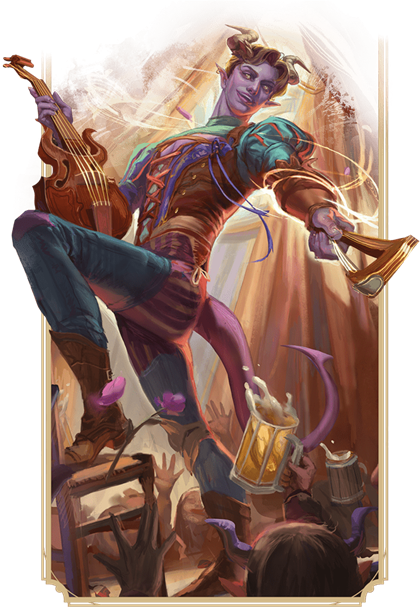
A disharmonious cacophony of sound fills the night air as two colorfully dressed figures stand opposite each other, each vying for the attention of the crowd that is listening with awe. Flashes of arcane energy twirl around each bard, evidence of how their music manipulates the essence of creation itself as they play.
The Weavers of Story and Harmony
Bards are not just performers; they are the living vessels of the world’s lore, the keepers of ancient and contemporary stories, and the voices that echo through history. Their mastery of song, speech, and magic allows them to manipulate the essence of reality itself, making them indispensable in both battle and peacetime. They bring levity during grave moments, impart wisdom to offset ignorance, and transform the mundane into the extraordinary through their art.

Bards are the historians, the entertainers, and the storytellers of the world. They preserve ancient history through their songs and tales, ensuring that great events and heroic deeds are remembered long after they have passed from living memory. But their role doesn’t stop at chronicling the past. Bards are also the heralds of the present, capturing the essence of today’s heroes in their performances, making them the pop stars of the D&D world.
But being a bard is more than just having a glib tongue and a melodious voice. What sets a bard apart is their unique ability to captivate an audience, blending style and substance in a way that leaves a lasting impact. When playing a bard, consider modeling your character after your favorite musician or performer, and think about what makes them unforgettable.

Every adventure a bard undertakes is a new chapter in their ever-growing repertoire. Whether they are deciphering ancient tomes, discovering lost works of magic, or encountering exotic creatures, each experience adds depth to their performances. Bards are driven by a thirst for knowledge and a desire to perfect their craft, constantly seeking out new experiences to enrich their songs and stories.
Every bard dreams of creating a piece of art so powerful that it defines their legacy: a song, poem, or performance that becomes synonymous with their name. This Defining Work is what makes a bard truly unforgettable. Even if your bard is just starting out, they likely have a few pieces that have already begun to make a mark on their audience.
| (d6) | Examples of Defining Works |
|---|---|
| 1. | “The Three Flambinis”: A ribald song about mistaken identities and unfettered desire, a guaranteed crowd-pleaser. |
| 2. | “Waltz of the Myconids”: An upbeat tune beloved by children, inspiring them to dance along. |
| 3. | “Asmodeus’s Golden Arse”: A dramatic poem inspired by a personal visit to Avernus, recounting devilish grandeur. |
| 4. | “The Pirates of Luskan”: A thrilling firsthand account of your childhood kidnapping by sea reavers. |
| 5. | “A Hoop, Two Pigeons, and a Hell Hound”: A biting parody that lampoons an incompetent noble. |
| 6. | “A Fool in the Abyss”: A comedic poem about a jester’s misadventures in the demonic realms. |
| d6 | I became a bard because... |
|---|---|
| 1 | I awakened my latent talent by reading the right book at the right time. |
| 2 | I was a gifted performer and attracted the attention of a master bard who schooled me in the old techniques. |
| 3 | I joined a loose society of scholars and orators to learn new techniques of performance. |
| 4 | I felt a deep calling to share the traditions and wisdom of my people. |
| 5 | I saw a bard perform once, and the yearning to learn how to weave magic into words and music was unstoppable. |
| 6 | I picked up a musical instrument one day and instantly discovered that I could play it. |

You can make a bard quickly by following these suggestions:
- First, Charisma should be your highest ability score, followed by Dexterity.
- Second, choose the entertainer background.
- Third, choose the dancing lights and vicious mockery cantrips, along with the following 1st-level spells: charm person, detect magic, healing word, and thunderwave.
Bards wield magic that flows from their very soul, shaped by the music and oratory they perform. This magic allows them to bend reality to their will, whether they’re casting spells to inspire allies or to lay low their enemies. With every note, a bard weaves the strands of magic that surround them, creating harmony out of chaos.
with rich, evocative details:
“In a bard’s quest for the ultimate performance and the highest acclaim, one’s instrument is as vital as the soul itself.”
In a bard’s journey, the instrument is more than just a tool—it’s a symbol of their craft and identity. The quality, uniqueness, and even the story behind an instrument can leave a lasting impression on an audience. Whether it’s a simple lute or an exotic creation, your instrument is a key part of your performance.
Consider the instrument your bard wields—whether it’s an heirloom, a gift, or a humble piece purchased with meager coin. Are you content with it, or do you dream of finding something truly extraordinary, an instrument that will not only play music but tell a story of its own?
| (d6) | Some Instrument Options | . |
|---|---|---|
| 1. | Halfling Fiddle | Masterfully crafted, it plays with a joyful lilt. |
| 2. | Mithral Horn | Elven-made, it produces clear, haunting notes. |
| 3. | Spider Silk Zither | Woven from drow silk, it hums with dark resonance. |
| 4. | Orcish Drum | Its deep, powerful beat stirs the heart. |
| 5. | Bullywug Croak Box | A curious, croaking instrument of amphibian origin. |
| 6. | Tinker’s Harp | A gnomish contraption, complex and melodious. |
Even the greatest bards have faced their share of onstage disasters. These moments, though embarrassing, are rites of passage that shape a bard’s career. Whether it’s a performance gone wrong or an unexpected mishap, what matters is how a bard rebounds.
| (d6) | Notable Embarrassments |
|---|---|
| 1. | The time when your comedic song, “Big Tom’s Hijinks,” fell flat: Especially with Big Tom himself, who was not amused. |
| 2. | The matinee when a circus’s owlbear escaped: It terrorized the crowd, leaving your performance in chaos. |
| 3. | Your enthusiastic but universally hated rendition of “Song of the Froghemoth”: The audience’s groans still haunt your dreams. |
| 4. | The disastrous debut of “Mirt, Man about Town”: It was the first and last time anyone heard that tune. |
| 5. | The night your wig caught fire on stage: In your panic, you threw it down and set the stage ablaze. |
| 6. | When you accidentally sat on your lute during “Starlight Serenade”: The final stanza ended with a loud, discordant crack. |
Every bard draws inspiration from a muse—a source that fuels their creativity and shapes their performances. Whether it’s the beauty of nature, the emotion of love, or the drama of conflict, a bard’s muse is central to their art.
Common Muses
•	Nature: You feel a profound connection to the natural world, finding inspiration in its beauty and mystery. To you, a tree is not just a tree—it is a symbol of life’s cycles, with roots delving into the earth’s depths and branches reaching toward the heavens. Nature has witnessed the rise and fall of countless kingdoms, and its ancient wisdom infuses your work with a timeless quality.
•	Love: You are on an eternal quest to understand true love, the kind that transcends physical attraction and touches the soul. This deeper form of love, which can inspire entire nations or bring peace to a troubled heart, is the focus of your art. You see love’s presence in everything—from the sparkle of a gem to the song of a fisherman—and your work is suffused with the passion and vitality of this most precious emotion.
•	Conflict: For you, the heart of every great story lies in conflict. Whether it’s the tale of a lover’s quarrel, a tavern brawl, or an epic battle between dynasties, conflict drives the drama that captivates audiences. You seek out experiences of conflict, great and small, to understand its role in the human experience and to immortalize these struggles in your music and tales.
| Level | Proficiency Bonus | Features | Cantrips Known | Spells Known | {1}Spell | {2}Spell | {3}Spell | {4}Spell | {5}Spell | {6}Spell | {7}Spell | {8}Spell | {9}Spell |
|---|---|---|---|---|---|---|---|---|---|---|---|---|---|
| 1st | +2 | Spellcasting, Bardic Inspiration (d6) | 2 | 4 | 2 | - | - | - | - | - | - | - | - |
| 2nd | +2 | Jack of All Trades, Song of Rest (d6) | 2 | 5 | 3 | - | - | - | - | - | - | - | - |
| 3rd | +2 | Bard College, Expertise | 2 | 6 | 4 | 2 | - | - | - | - | - | - | - |
| 4th | +2 | Ability Score Improvement | 3 | 7 | 4 | 3 | - | - | - | - | - | - | - |
| 5th | +3 | Bardic Inspiration (d8), Font of Inspiration | 3 | 8 | 4 | 3 | 2 | - | - | - | - | - | - |
| 6th | +3 | Countercharm, Bard College feature | 3 | 9 | 4 | 3 | 3 | - | - | - | - | - | - |
| 7th | +3 | - | 3 | 10 | 4 | 3 | 3 | 1 | - | - | - | - | - |
| 8th | +3 | Ability Score Improvement | 3 | 11 | 4 | 3 | 3 | 2 | - | - | - | - | - |
| 9th | +4 | Song of Rest (d8) | 3 | 12 | 4 | 3 | 3 | 3 | 1 | - | - | - | - |
| 10th | +4 | Bardic Inspiration (d10), Expertise, Magical Secrets | 4 | 14 | 4 | 3 | 3 | 3 | 2 | - | - | - | - |
| 11th | +4 | - | 4 | 15 | 4 | 3 | 3 | 3 | 2 | 1 | - | - | - |
| 12th | +4 | Ability Score Improvement | 4 | 15 | 4 | 3 | 3 | 3 | 2 | 1 | - | - | - |
| 13th | +5 | Song of Rest (d10) | 4 | 16 | 4 | 3 | 3 | 3 | 2 | 1 | 1 | - | - |
| 14th | +5 | Magical Secrets, Bard College feature | 4 | 18 | 4 | 3 | 3 | 3 | 2 | 1 | 1 | - | - |
| 15th | +5 | Bardic Inspiration (d12) | 4 | 19 | 4 | 3 | 3 | 3 | 2 | 1 | 1 | 1 | - |
| 16th | +5 | Ability Score Improvement | 4 | 19 | 4 | 3 | 3 | 3 | 2 | 1 | 1 | 1 | - |
| 17th | +6 | Song of Rest (d12) | 4 | 20 | 4 | 3 | 3 | 3 | 2 | 1 | 1 | 1 | 1 |
| 18th | +6 | Magical Secrets | 4 | 22 | 4 | 3 | 3 | 3 | 3 | 1 | 1 | 1 | 1 |
| 19th | +6 | Ability Score Improvement | 4 | 22 | 4 | 3 | 3 | 3 | 3 | 2 | 1 | 1 | 1 |
| 20th | +6 | Superior Inspiration | 4 | 22 | 4 | 3 | 3 | 3 | 3 | 2 | 2 | 1 | 1 |

As a bard, you gain the following class features.
Hit Dice: 1d8 per bard level
Hit Points at 1st Level: 8 + your Constitution modifier Hit Points at Higher LeveIs: Id8 (or 5) + your
Constitution modifier per bard level after 1st

Armor: Light armor
Weapons: Simple weapons, hand crossbows,
longswords, rapiers, shortswords
Tools: Three musical instruments of your choice
Saving Throws: Dexterity, Charisma
Skills: Choose any three
You start with the following equipment, in addition to the equipment granted by your background:
- (a) a rapier, (b) a longsword, or (c) any simple weapon
- (a) a diplomat's pack or (b) an entertainer's pack
- (a) a lute or (b) any other musical instrument
- Leather armor
- A dagger
You have learned to untangle and reshape the fabric of reality in harmony with your wishes and music. Your spells are part of your vast repertoire, magic that you can tune to different situations.
You know two cantrips of your choice from the bard spell list. You learn additional bard cantrips of your choice at higher levels, as shown in the Cantrips Known column of the Bard table.
The Bard table shows how many Spell Slots you have to cast your Spells of 1st Level and higher. To cast one of these Spells, you must expend a slot of the spell's level or higher. You regain all expended Spell Slots when you finish a Long Rest.
For example, if you know the 1st-level spell Cure Wounds and have a 1st-level and a 2nd-level spell slot available, you can cast Cure Wounds using either slot.

You know four 1st-level Spells of your choice from the bard spell list.
The Spells Known column of the Bard table shows when you learn more bard Spells of your choice. Each of these Spells must be of a level for which you have Spell Slots. For instance, when you reach 3rd Level in this class, you can learn one New Spell of 1st or 2nd Level.
Additionally, when you gain a level in this class, you can choose one of the bard Spells you know and replace it with another spell from the bard spell list, which also must be of a level for which you have Spell Slots.
Spellcasting Ability
Charisma is your Spellcasting ability for your bard Spells. Your magic comes from the heart and soul you pour into the Performance of your music or oration. You use your Charisma whenever a spell refers to your Spellcasting ability. In addition, you use your Charisma modifier when setting the saving throw DC for a bard spell you cast and when making an Attack roll with one.
Spell save DC = 8 + your Proficiency bonus + your Charisma modifier Spell Attack modifier = your Proficiency bonus + your Charisma modifier
You can cast any bard spell you know as a ritual if that spell has the ritual tag.

Spellcasting Focus
You can use a musical instrument (see "Equipment") as a Spellcasting focus for your bard Spells.

Bardic Inspiration $1$ $5$ $10$ $15$
You can inspire Others through stirring words or music. To do so, you use a bonus Action on Your Turn to choose one creature other than yourself within 60 feet of you who can hear you. That creature gains one Bardic Inspiration die, a d6.
Once within the next 10 minutes, the creature can roll the die and add the number rolled to one ability check, Attack roll, or saving throw it makes. The creature can wait until after it rolls The D20 before deciding to use the Bardic Inspiration die, but must decide before the DM says whether the roll succeeds or fails. Once the Bardic Inspiration die is rolled, it is lost. A creature can have only one Bardic Inspiration die at a time.
You can use this feature a number of times equal to your Charisma modifier (a minimum of once). You regain any expended uses when you finish a Long Rest.
Your Bardic Inspiration die changes when you reach certain levels in this class. The die becomes a d8 at 5th Level, a d10 at 10th level, and a d12 at 15th level.

Starting at 2nd Level, you can add half your Proficiency bonus, rounded down, to any ability check you make that doesn't already include your Proficiency bonus.

Song of Rest $2$ $9$ $13$ $17$
Beginning at 2nd Level, you can use soothing music or oration to help Revitalize your wounded Allies during a Short Rest. If you or any friendly Creatures who can hear your Performance regain Hit Points by spending Hit Dice at the end of the Short Rest, each of those Creatures regains an extra 1d6 Hit Points.
The extra Hit Points increase when you reach certain levels in this class: to 1d8 at 9th Level, to 1d10 at 13th level, and to 1d12 at 17th level.

Bard College $3$ $6$ $14$
At 3rd level, a bard’s journey takes a definitive turn as they choose a Bard College—a specialization that shapes their magic and performance.
At 3rd Level, you delve into the advanced Techniques of a Bard College of your choice, such as the College of Lore. Your choice grants you Features at 3rd Level and again at 6th and 14th level.

Expertise $3$ $10$
At 3rd Level, choose two of your skill Proficiencies. Your Proficiency bonus is doubled for any ability check you make that uses either of the chosen Proficiencies.
At 10th level, you can choose another two skill Proficiencies to gain this benefit.
Ability Score Improvement $4$ $8$ $12$ $16$ $19$
When you reach 4th Level, and again at 8th, 12th, 16th, and 19th level, you can increase one ability score of your choice by 2, or you can increase two Ability Scores of your choice by 1. As normal, you can’t increase an ability score above 20 using this feature.

Font of Inspiration $5$
Beginning when you reach 5th Level, you regain all of your expended uses of Bardic Inspiration when you finish a short or Long Rest.

Countercharm $6$
At 6th Level, you gain the ability to use musical notes or words of power to disrupt mind-influencing Effects. As an Action, you can start a Performance that lasts until the end of your next turn. During that time, you and any friendly Creatures within 30 feet of you have advantage on Saving Throws against being Frightened or Charmed. A creature must be able to hear you to gain this benefit. The Performance ends early if you are Incapacitated or silenced or if you voluntarily end it (no Action required).
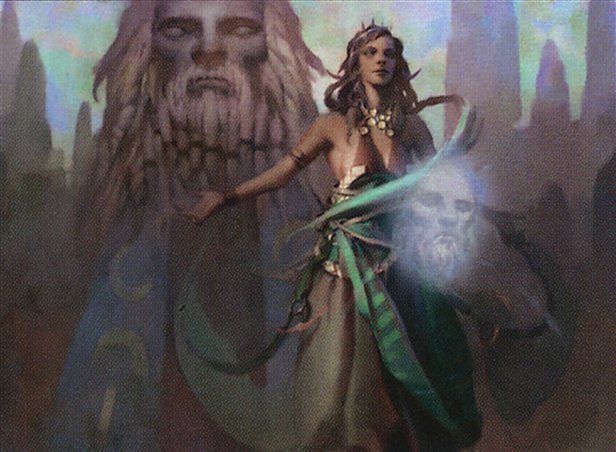
By 10th level, you have plundered Magical knowledge from a wide spectrum of disciplines. Choose two Spells from any class, including this one. A spell you choose must be of a level you can cast, as shown on the Bard table, or a cantrip.
The chosen Spells count as bard Spells for you and are included in the number in the Spells Known column of the Bard table.
You learn two additional Spells from any class at 14th level and again at 18th level.
Superior Inspiration $20$
At 20th level, when you roll Initiative and have no uses of Bardic Inspiration left, you regain one use.