Install Portainer
Install TREK on Portainer using a Stack (Docker Compose).
Portainer must be installed and connected to your Docker environment. Use Stacks — it supports Docker Compose and gives you the full compose syntax including environment variables, volumes, and restart policies.

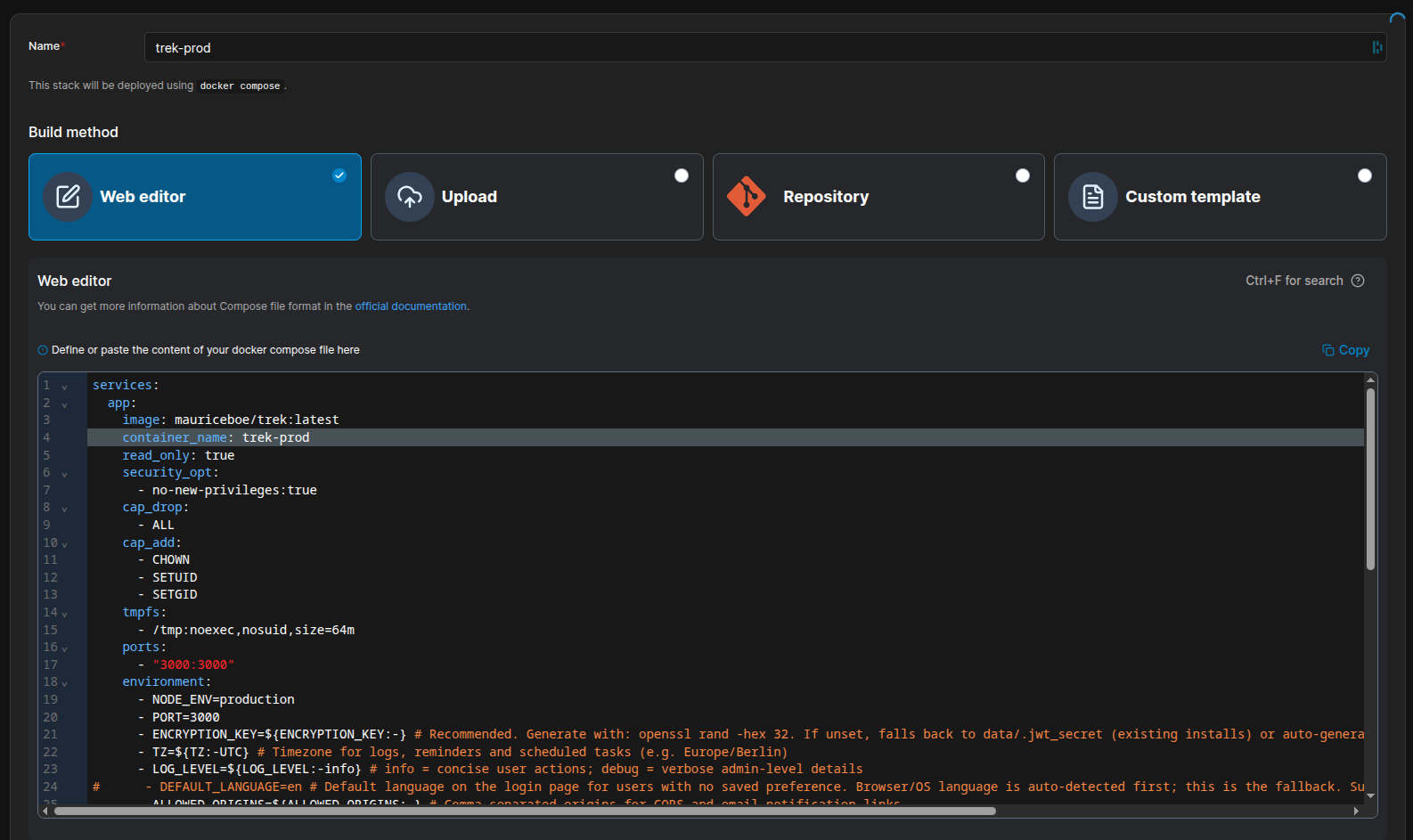
- In Portainer, go to Stacks → Add stack.
- Give the stack a name (e.g.
trek). - Select Web editor and paste the compose file from docker-compose.yml.
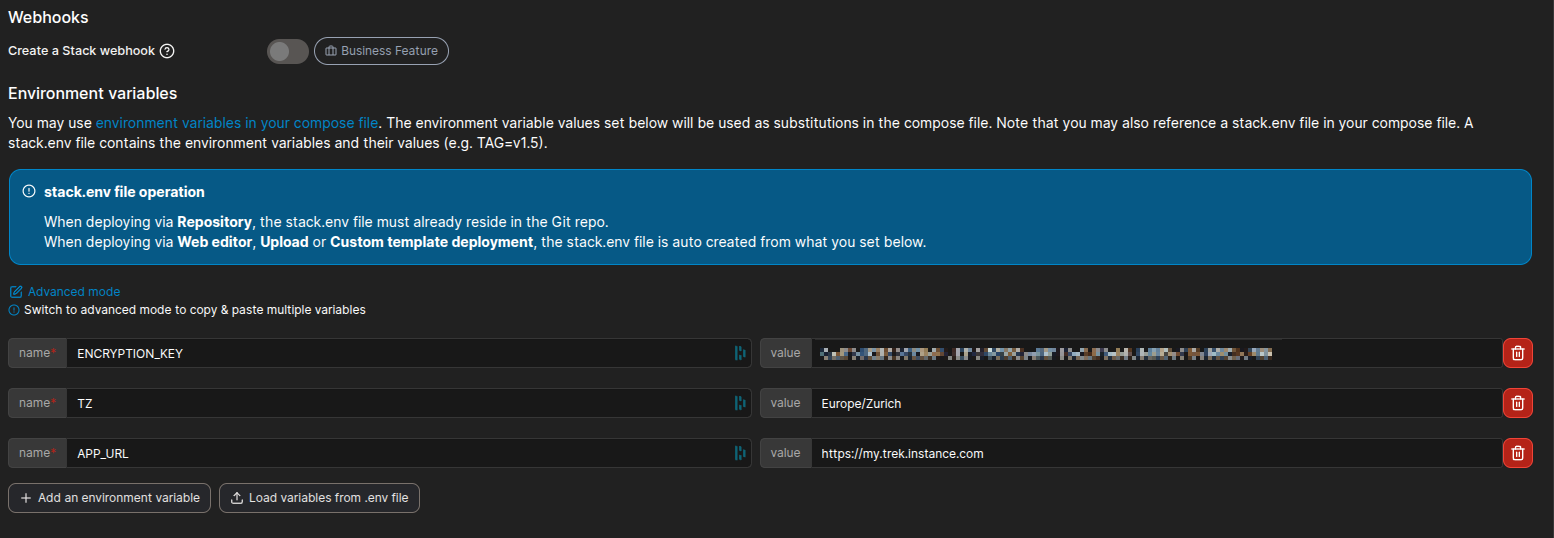
- Fill in the environment variables at the bottom of the page.
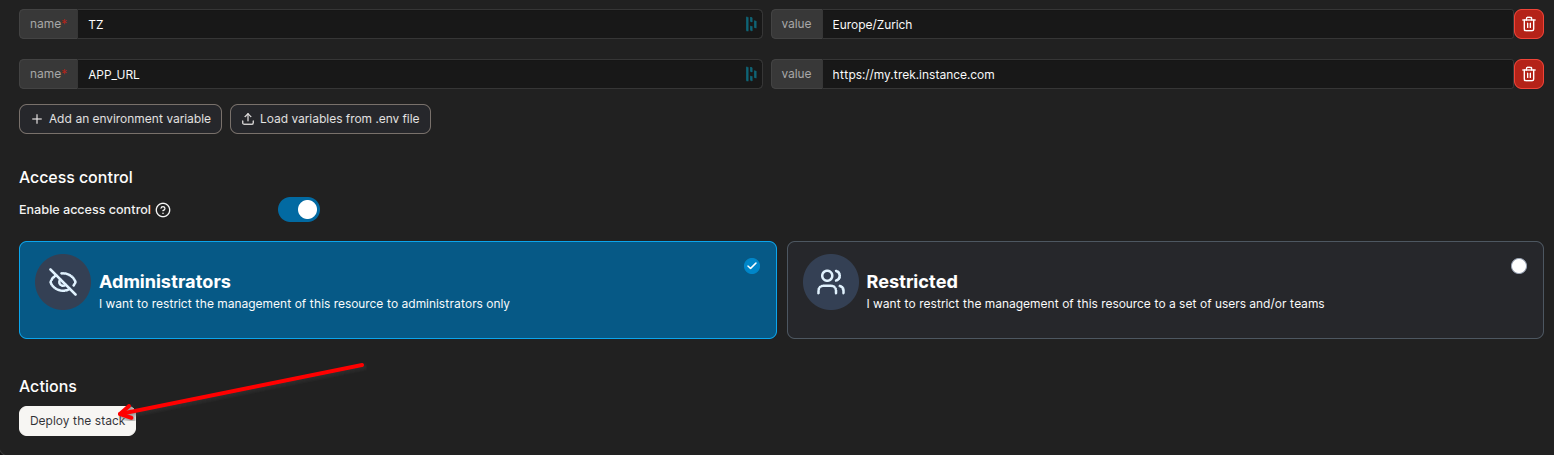
- Click Deploy the stack.
See https://github.com/mauriceboe/TREK/blob/main/docker-compose.yml
Set at minimum ENCRYPTION_KEY, TZ, and APP_URL in the Environment variables section of the stack editor. Generate an encryption key with:
openssl rand -hex 32Three tag strategies are available:
| Tag | Example | Behavior |
|---|---|---|
latest |
mauriceboe/trek:latest |
Always the newest release across all major versions |
| Major version | mauriceboe/trek:3 |
Latest release pinned to that major version |
| Full version | mauriceboe/trek:3.0.15 |
Exact release; never changes |
Use latest or a major-version tag (e.g. 3) if you want automatic updates on redeploy. Use a full version tag (e.g. 3.0.15) if you want explicit control over which release runs.
How you update depends on the tag you chose:
latest or major-version tag — In Portainer, open the stack, click Redeploy, enable the Re-pull image and redeploy switch, then confirm. Portainer will pull the newest matching image and recreate the container.
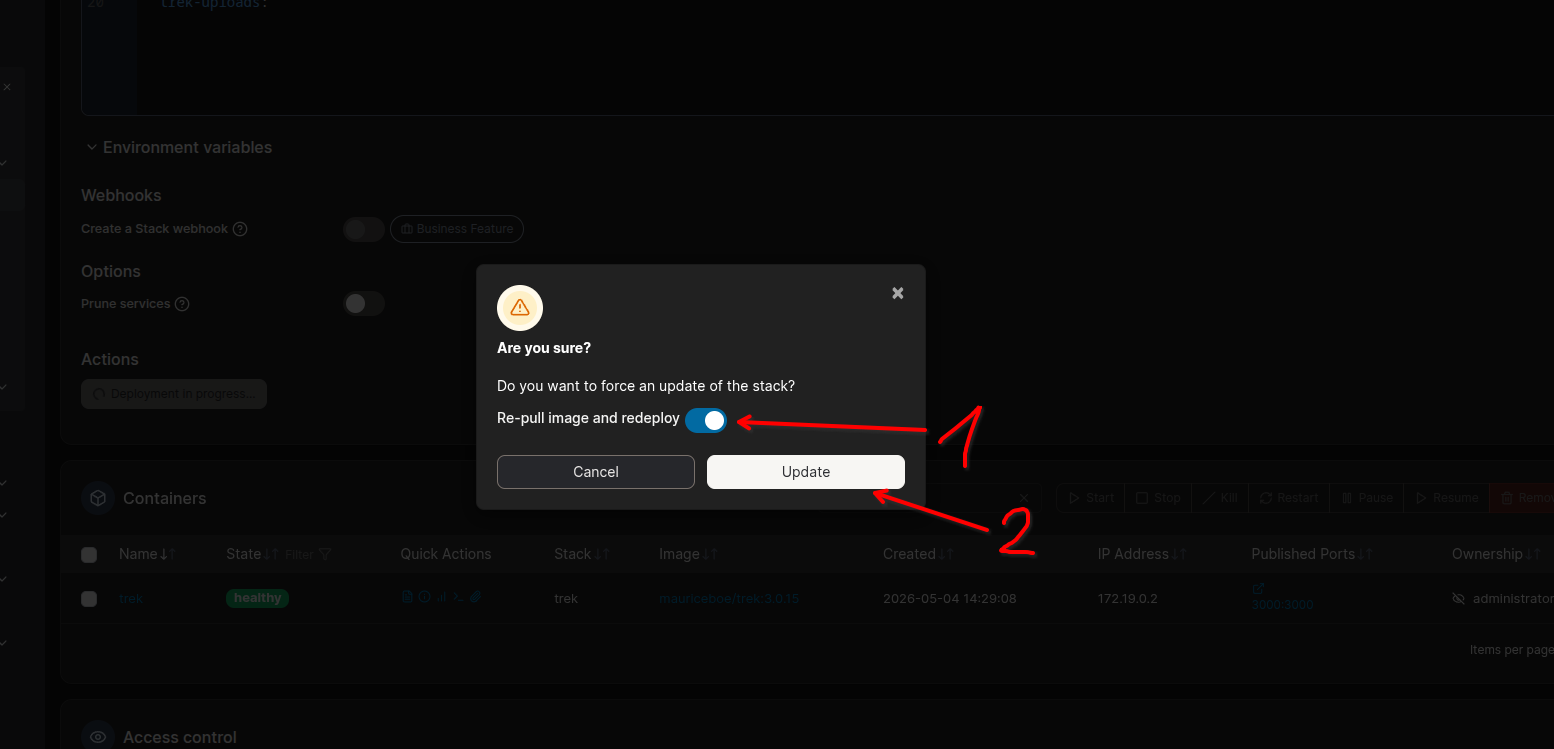
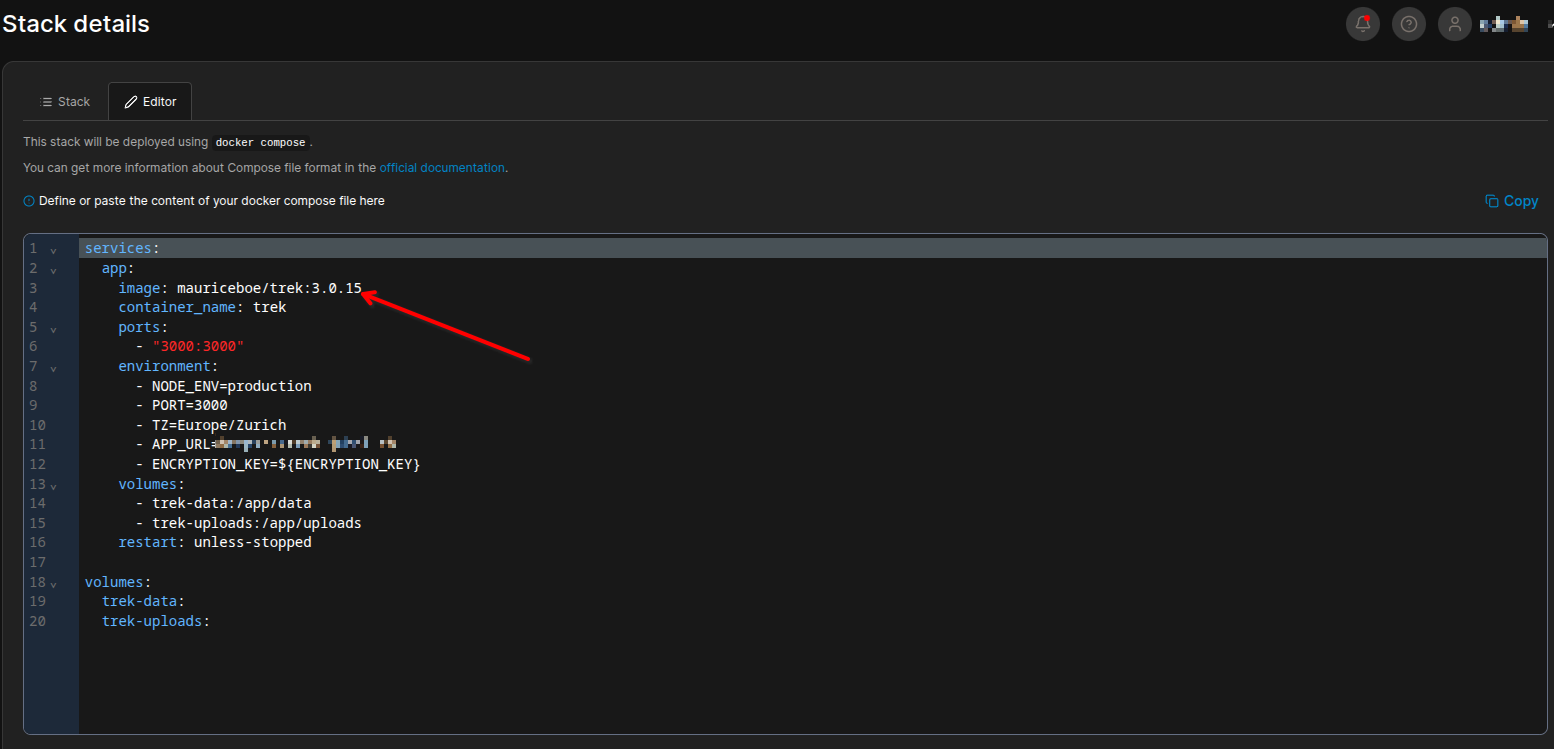
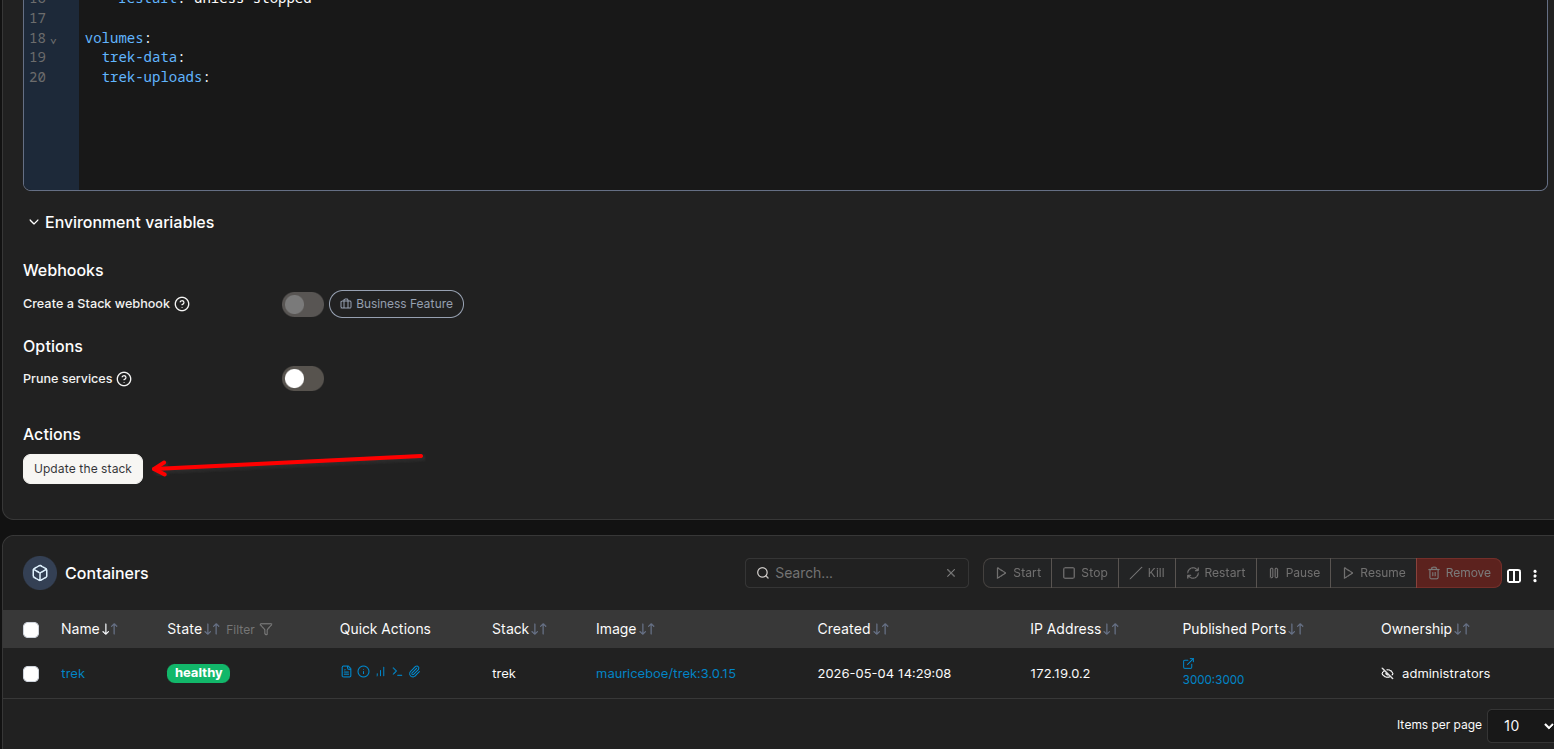
Pinned full-version tag — Edit the stack, change the tag in the image: line (e.g. 3.0.15 → 3.0.16), then click Update the stack. No need to toggle the re-pull switch — a tag change forces a fresh pull.
Back up your data before any update. Go to Admin Panel → Backups or copy your
./dataand./uploadsdirectories. See Backups.
| Stack-relative path | Container path | Contents |
|---|---|---|
./data |
/app/data |
SQLite database, logs, encryption key |
./uploads |
/app/uploads |
Uploaded files (photos, documents, covers, avatars) |
Portainer resolves ./ relative to the stack's working directory. Confirm the paths under Stack details after deploying.
You can use Docker named volumes instead of bind mounts. Named volumes are fully managed by Docker and not tied to a host path — a good fit for Portainer where the working directory can vary. See the Docker Compose volumes reference for all options.
Replace the volumes: block in the service and add a top-level declaration:
services:
  app:
    # ... (rest of service config unchanged)
    volumes:
      - trek_data:/app/data
      - trek_uploads:/app/uploads

volumes:
  trek_data:
  trek_uploads:
Portainer lists named volumes under Volumes in the sidebar, where you can inspect or back them up.
- Environment-Variables — full variable reference
- Reverse-Proxy — HTTPS configuration
- Updating — update strategies across all install methods