Textbook 03 Architecture And Open Core Design
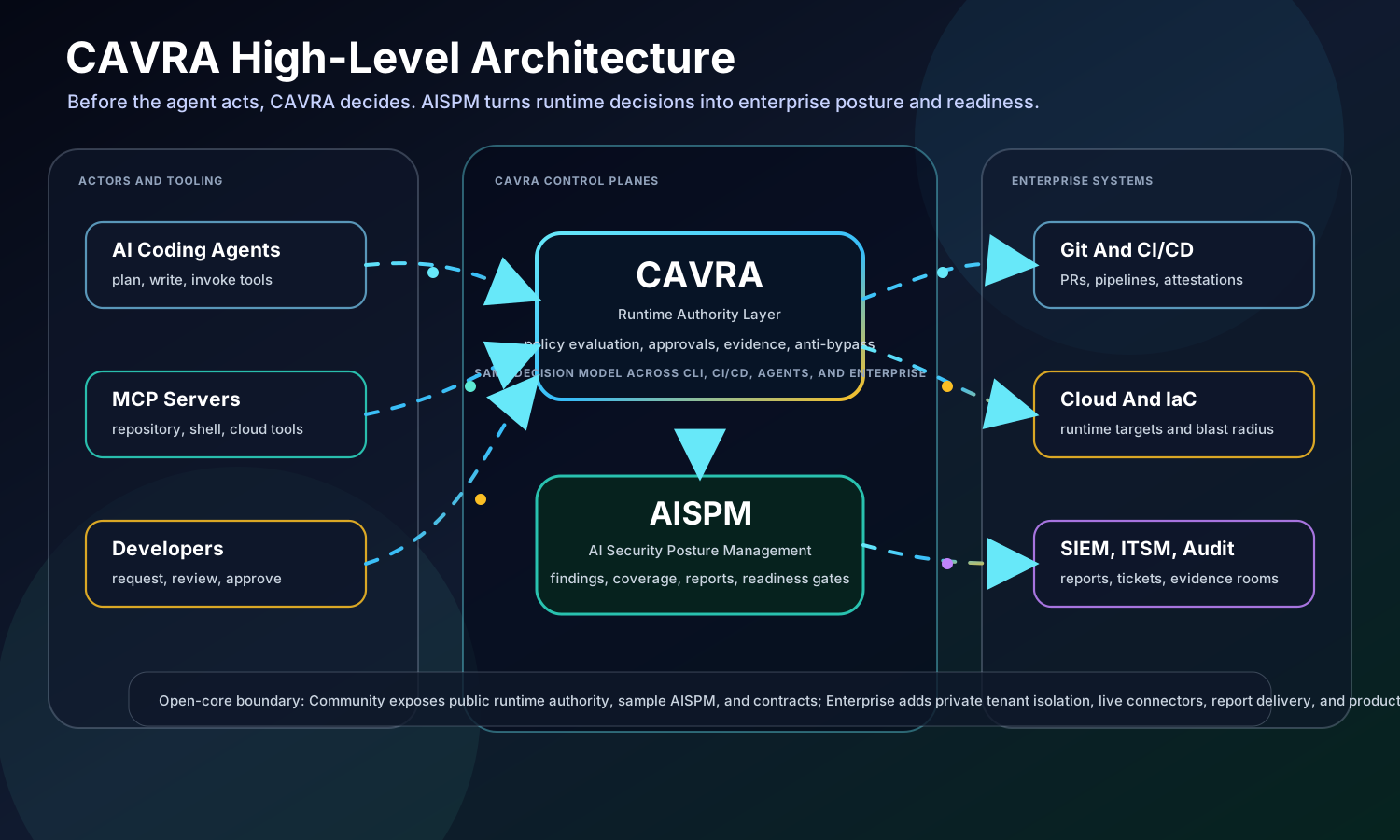
CAVRA uses an open-core architecture. The public repository contains the Community Edition, public contracts, sample policy packs, API and CLI surfaces, sandbox UI, public-safe AISPM surfaces, and documentation. Enterprise source code lives outside the public repository.
| Component | Purpose |
|---|---|
| CLI | Local and automation-facing command interface for policy, decisions, approvals, evidence, registry, release, runtime, and demos. |
| API | HTTP surface for decisions, policy packs, agents, approvals, evidence, integrations, AISPM samples, and sandbox workflows. |
| Policy engine | Evaluates action requests against policy packs and runtime context. |
| Approval store | Tracks pending, approved, denied, expired, and break-glass decisions. |
| Evidence hub | Generates, signs, verifies, indexes, searches, exports, and retains decision evidence. |
| Agent registry | Tracks governed agent identities and capabilities. |
| MCP trust registry | Tracks MCP servers, trust tiers, approval states, capabilities, and tool classifications. |
| Sandbox GUI | Static public portal that demonstrates runtime governance, evidence, AISPM, reports, and trial flows. |
| AISPM | AI Security Posture Management surfaces for posture, findings, coverage, reports, trial readiness, and production gates. |
Community Edition includes local governance and public-safe workflows. Enterprise features include organization-wide identity, live connectors, tenant isolation, private policy packs, central dashboards, compliance reporting, production report delivery, and live AISPM ingestion.
See Edition Boundaries and Private Enterprise Repo Plan for detailed separation.
CAVRA can be understood through four planes:
- Decision plane: policy evaluation, runtime decisions, command checks, MCP checks, and high-risk action handling.
- Identity and trust plane: agents, MCP trust, OIDC, RBAC, tenant context, and entitlement state.
- Evidence plane: signed evidence, trust roots, attestation, metadata, search, retention, SIEM export, and report packaging.
- Posture plane: AISPM dashboards, findings, control coverage, report center, trial readiness, and production readiness gates.
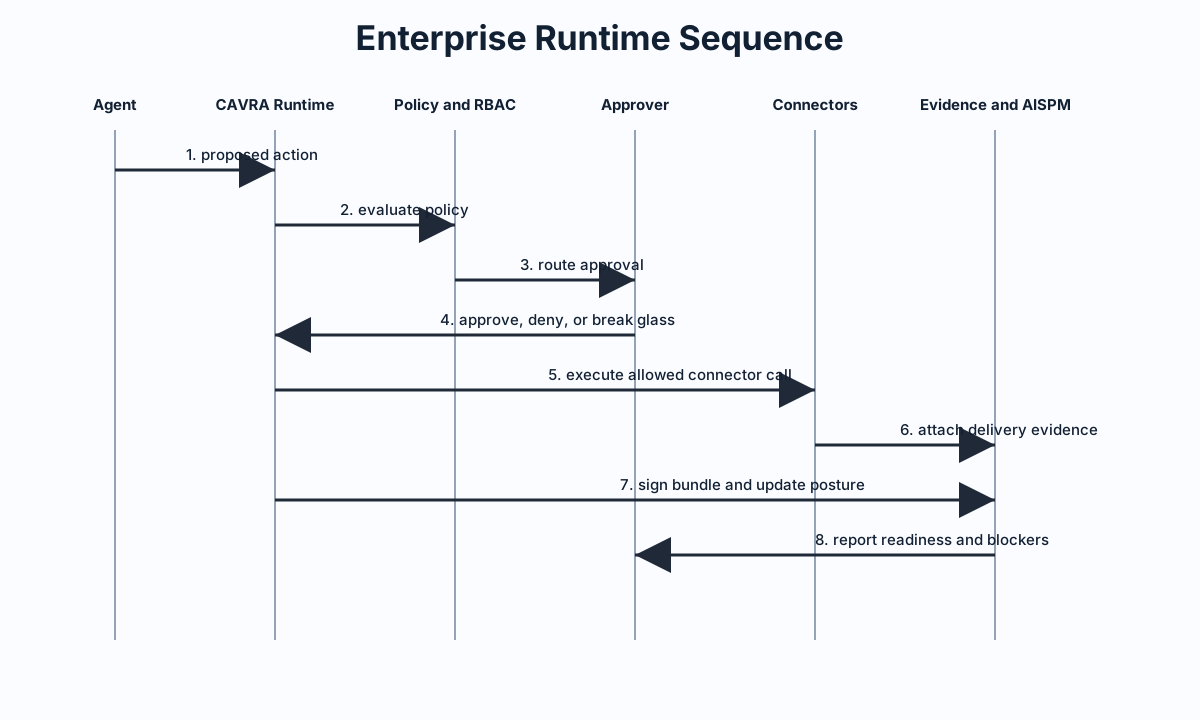
Every CAVRA integration should preserve the same logical flow:
- Capture the attempted action from a CLI call, agent hook, MCP tool, CI runner, API request, or Enterprise connector.
- Normalize the action into a decision request with actor, action type, resource, repository, policy pack, policy mode, and tenant context when applicable.
- Load policy, registry, approval, identity, and evidence context.
- Return a decision: allow, deny/block, requires approval, shadow, or break glass.
- Enforce the decision at the caller.
- Generate evidence and make it available for search, report, attestation, or AISPM ingestion.
The architecture is intentionally caller-neutral. A local CLI, a GitHub Actions runner, a Claude Code wrapper, and an Enterprise runtime workflow should all be able to ask the same control question: should this action proceed?
| Data type | Community handling | Enterprise handling |
|---|---|---|
| Policy packs | Public and local policy YAML. | Private policy registry, signed packs, tenant assignment. |
| Agent identity | Local agent/profile records. | SSO/RBAC, tenant-bound identity, audit records. |
| MCP trust | Public-safe registry examples. | Organization trust registry and connector-backed validation. |
| Evidence | Local bundles, sample exports, public-safe packets. | Tenant audit store, retention, immutable storage, SIEM/export connectors. |
| AISPM | Static samples and schemas. | Live ingestion, streaming, report delivery, tenant posture. |
The public repository must teach the control model without leaking private enterprise implementation, customer evidence, connector credentials, tenant secrets, or paid policy packs. That is why the Community Edition exposes the shape of decisions, policy, evidence, GUI, and public-safe AISPM while Enterprise adds production data plane integrations and commercial operating controls.
CAVRA Community Edition lets a team learn the operating model locally. A typical path is:
- Run local evaluations with starter policies.
- Generate evidence bundles and verify attestations.
- Use the sandbox GUI to understand decisions and AISPM.
- Add CI/CD enforcement and required evidence.
- Move into Enterprise evaluation when SSO, RBAC, tenant isolation, live connectors, and production reporting are required.
- Which plane produces signed proof for audit and reporting?
- Why does the public repository avoid private connector and tenant implementation details?
- What changes when a team moves from Community to Enterprise?
Read Editions, Licensing, And Feature Boundaries to choose the right operating model.